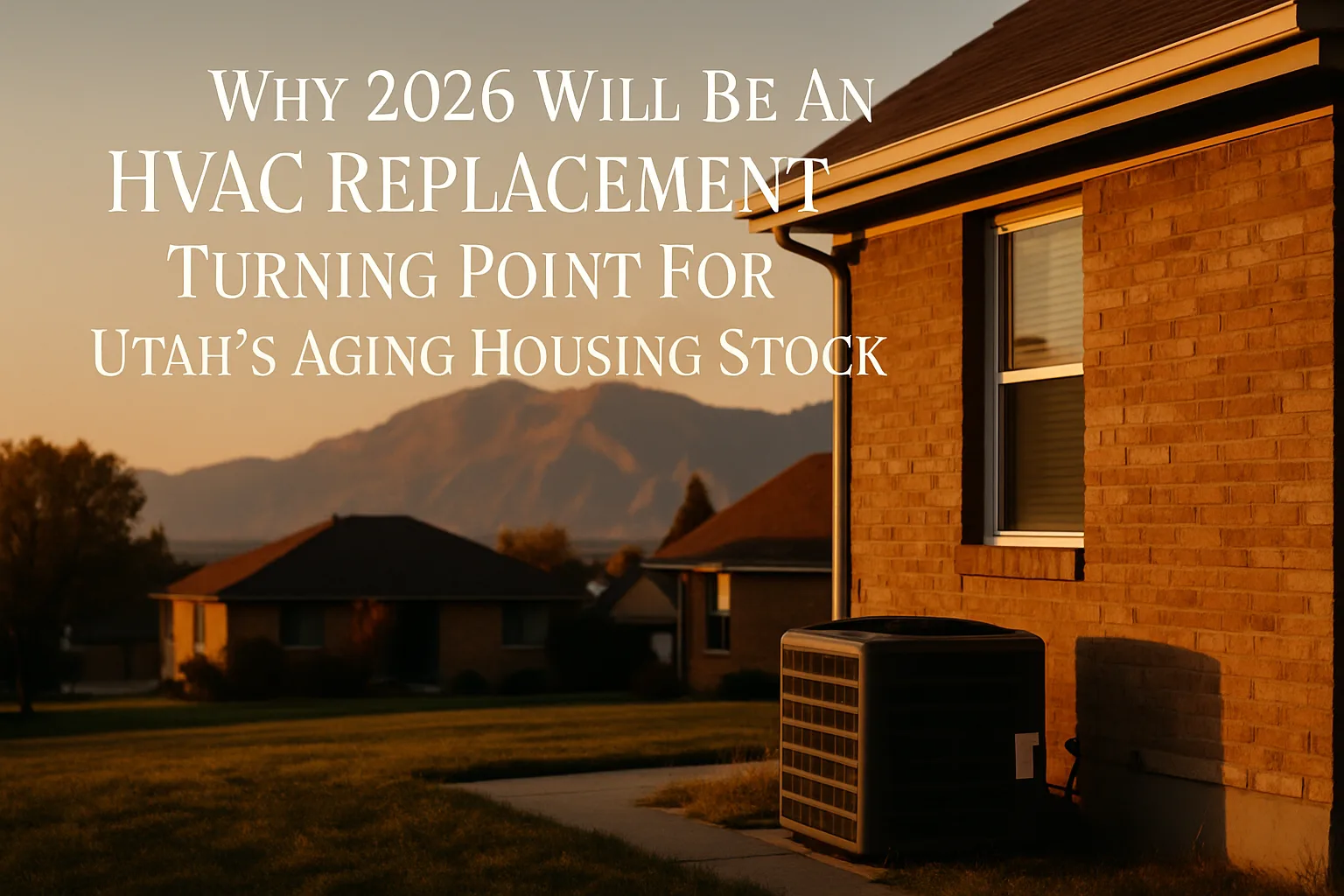
Why 2026 Will Be An HVAC Replacement Turning Point For Utah’s Aging Housing Stock
It’s no secret that Utah’s overall housing inventory is starting to get up there in age, and 2026 is subsequently shaping up to become a rather pivotal moment for HVAC system replacements all over the entire state.
It’s no secret that Utah’s overall housing inventory is starting to get up there in age, and 2026 is subsequently shaping up to become a rather pivotal moment for HVAC system replacements all over the entire state.
As older properties continue to show signs of aging in terms of HVAC performance on a broad scale, real estate professionals, homeowners and HVAC contractors alike are all thoroughly recognizing how replacing outdated systems is now more of a necessity than ever before.
We recently interviewed a renowned HVAC contractor based in Salt Lake City, Utah to better understand why 2026 will like be a noticeable turning point for Utah’s aging housing stock, so check out the below sections to learn more about what homeowners can expect this year!
Aging HVAC Systems Are Struggling To Keep Up With Today’s Energy Demands
Countless residential properties were built in Utah several decades ago, which was long before the establishment of current indoor comfort, energy efficiency and HVAC system performance expectations.
Older HVAC systems, particularly those over 15 years old, can simply no longer match modern energy standards and demands in terms of reliability and efficiency. As HVAC systems age, they naturally lose efficiency and capacity—which unfortunately leads to issues like increased breakdown risks and higher monthly energy bills.
Many Utah households lose up to 25% of their property efficiency simply because they own an outdated HVAC system, and this is a huge reason why so many people are currently seeing HVAC replacements as an absolute necessity this year.
And when you add Utah’s harsh climate into the equation, these issues compound upon themselves. Scorching summers and frigid winters put an intense amount of stress on our state’s HVAC systems, and this is negatively impacting the older housing stock’s resale value.
HVAC Change Being Driven By New Efficiency Standards
Another major catalyst behind the widespread need for HVAC replacements here in Utah is the ongoing shift toward much stricter efficiency rating systems and standards.
There are now new benchmarks including EER2 and SEER2 that are growing in popularity throughout the entire HVAC industry, which is subsequently leading to a largescale phasing out of older performance measures.
As new performance metrics take over, more people are naturally encouraged to improve their system efficiency due to older models not measuring up to the latest industry expectations.
Not only does this improve energy performance for countless homes in Utah, but it also opens the door for future-proof installations that are capable of adapting to changing national and local codes.
Energy-Saving Opportunities & Incentives
There are also many significant rebates and incentives available to Utah homeowners when they invest in energy-efficient HVAC upgrades, and this momentum is undoubtedly carrying into 2026.
And although some of these incentives will be changing this year, many proactive homeowners are leveraging broader energy-saving strategies and local utility rebates for services like air sealing and insulation.
Sustainable, Long-Term Cost Savings
Many Utah households are currently thinking more long-term when it comes to their energy usage and overall sustainability.
The latest HVAC systems have made dramatic improvements in terms of efficiency in comparison to the units from just a decade ago, and this means that HVAC upgrades generally lead to reduced carbon footprints and improved year-round performance.
And as energy consumption and environmental impact concerns grow, HVAC replacements are becoming an integral part of broader eco-conscious strategies.
And in addition to ecological benefits, new HVAC systems are also offering significant cost savings. Higher HSPF and SEER2 ratings subsequently translate into quicker ROIs, lower monthly utility bills and reduce maintenance needs.
Utah’s Home Values & Market Trends
It’s no secret how Utah has a very competitive real estate market, and this overall competitiveness directly correlates to the connection between a property’s HVAC system condition and resale value.
Buyer interest has rapidly changed in recent years, and this is partially because today’s buyers are savvier about vital HVAC system factors like lifecycle costs.
When a listing has an outdated system, it commonly becomes a negotiation point or deterrent. On the other hand, a new, high-efficiency HVAC unit inevitably enhances a property’s market appeal.
So, for homeowners thinking about selling this year or in the near future, a well-planned HVAC replacement can create more favorable market positioning that avoids last-minute closing issues during negotiations and inspections.
2026 Marks A New HVAC Era In Utah’s Housing Market
2026 will be remembered as so much more than just another calendar year, because it’ll mark a widespread shift here in Utah around how countless people approach their HVAC system needs.
As energy expenses continue to rise, efficiency standards evolve and older systems inevitably reach their twilights, modern HVAC upgrades are becoming a strategic priority.
By aligning HVAC replacement investments with broader energy trends and performance goals, Utah families can now enjoy lower costs, improved indoor comfort, and substantially increased home values in the coming years ahead!
Keep reading
More from the blog
Gas Line Installation: What Homeowners Need to Know First
Roof Timeline Guide for Buying an Older Utah Home
How to Choose Windows for a Utah Home With a Mountain View