Planning Your Park City Mountain Home: How 3D Design Tools Help Buyers Visualize
Park City's real estate market presents unique challenges that don't exist in typical suburban neighborhoods. Between dramatic elevation changes, mountain views that shift with every room angle, and the need to balance ski-in accessibility with year-round livability, buying a Park City home requires envisioning possibilities that standard property photos simply can't convey.
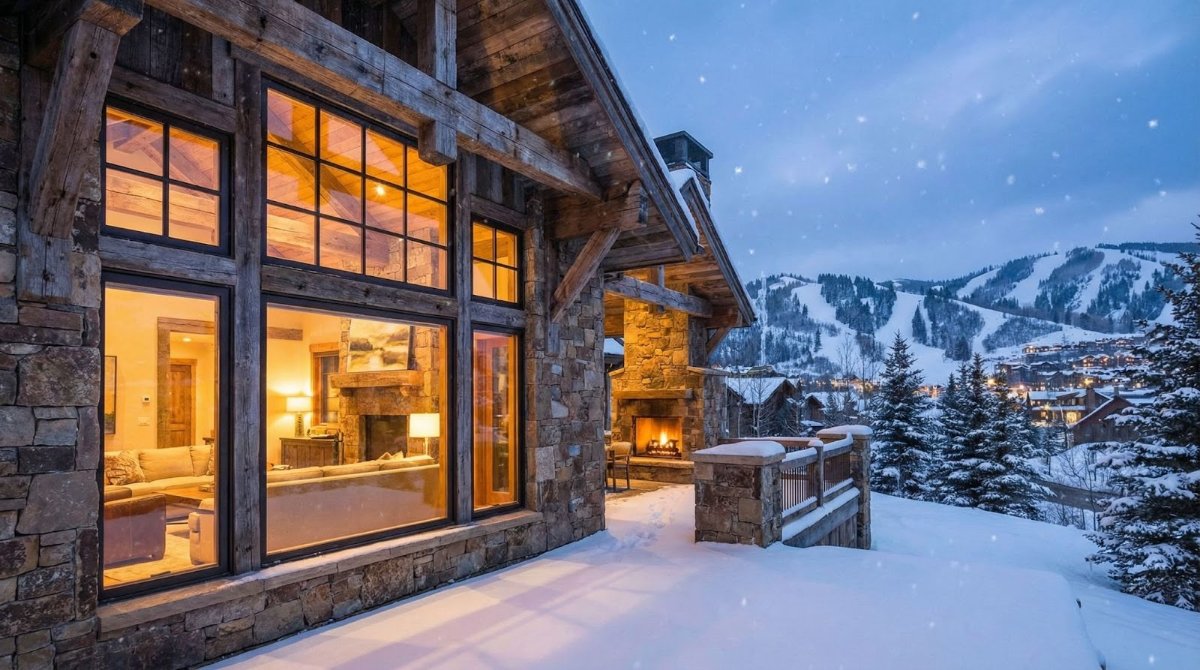
Park City's real estate market presents unique challenges that don't exist in typical suburban neighborhoods. Between dramatic elevation changes, mountain views that shift with every room angle, and the need to balance ski-in accessibility with year-round livability, buying a Park City home requires envisioning possibilities that standard property photos simply can't convey. If a move is on the table, take a look at current Park City homes for sale.
The stakes run high here. Average Park City home prices exceed $4.5 million, making mistakes expensive. A poorly planned renovation could compromise mountain views. Furniture that works perfectly in a Salt Lake City rambler might look absurdly out of scale against cathedral ceilings and floor-to-ceiling windows showcasing the Wasatch Range. Traditional home shopping methods leave too much to imagination when dealing with properties this distinctive and investments this significant.
Smart buyers are adopting a different approach. Before making offers, signing contracts, or committing to renovations, they're using 3D design technology to visualize exactly how these mountain properties will work for their lifestyle. The results transform the buying experience from hopeful guessing into confident decision-making.
The Park City Property Challenge
Park City homes aren't cookie-cutter properties. Each sits at different elevations with unique slope orientations. Some face east toward the morning sun, hitting the mountains. Others look west for sunset views over the valley. North-facing homes stay cooler in summer but receive less natural light. South-facing properties maximize solar gain but may overheat without proper planning.
These variables create complexity when shopping. You're not just buying square footage. You're buying a specific relationship between interior spaces and the dramatic landscape surrounding them. A living room might have perfect proportions on paper but feel cramped once you account for the massive stone fireplace required for mountain aesthetics and the oversized sectional needed to host après-ski gatherings.
Standard property photos help, but they deceive. Wide-angle lenses make rooms appear larger. Staging shows one possible furniture arrangement, but it doesn't reveal whether your grand piano fits or if your dining table leaves enough clearance for the mountain views. Virtual tours let you click through spaces, but they don't answer the critical question: how will this home work for your specific needs?
How 3D Design Technology Transforms Mountain Home Shopping
Modern 3D home design platforms solve the visualization gap between property listings and real-world living. These tools let you create accurate digital versions of properties you're considering, then experiment with furniture placement, color schemes, and renovation possibilities before making any commitments.
The process starts with measurements. Whether you're touring a property in person or working from floor plans, you input the room dimensions, ceiling heights, window locations, and architectural features. For Park City homes, this includes those distinctive elements like vaulted ceilings, exposed beam structures, and the massive windows that frame mountain vistas.
Once the basic structure exists digitally, you can test how your actual furniture fits. That section from your previous home? Place it virtually and see if it overwhelms the great room or if there's still comfortable circulation space. Your dining table? Position it to verify guests enjoy mountain views without glare from those enormous west-facing windows.
Visualizing Renovations Before You Buy
Many Park City buyers purchase properties intending to renovate. The dated ski chalet from the 1980s might have perfect bones and an unbeatable location, but it needs updating. Before making an offer, 3D design lets you visualize those changes.
Want to open up that kitchen to the living area? Model it digitally and see how the new layout affects sight lines to the mountains. Considering expanding the master suite? Visualize whether the addition blocks views from the main living spaces. Planning to replace dark wood paneling with lighter finishes? Test color schemes to ensure they complement rather than compete with the landscape visible through every window.
This visualization capability proves especially valuable for out-of-state buyers, who comprise a significant portion of Park City's market. When you can't easily return for multiple property visits, being able to test renovation scenarios virtually before making an offer provides crucial confidence.
Using Arcadium to Plan Your Mountain Home
Among the various 3D design platforms available, the Arcadium 3d free room design tool stands out for its accessibility and mountain home-specific capabilities. Unlike professional architectural software that requires extensive training, Arcadium focuses on intuitive controls that let you start designing within minutes.
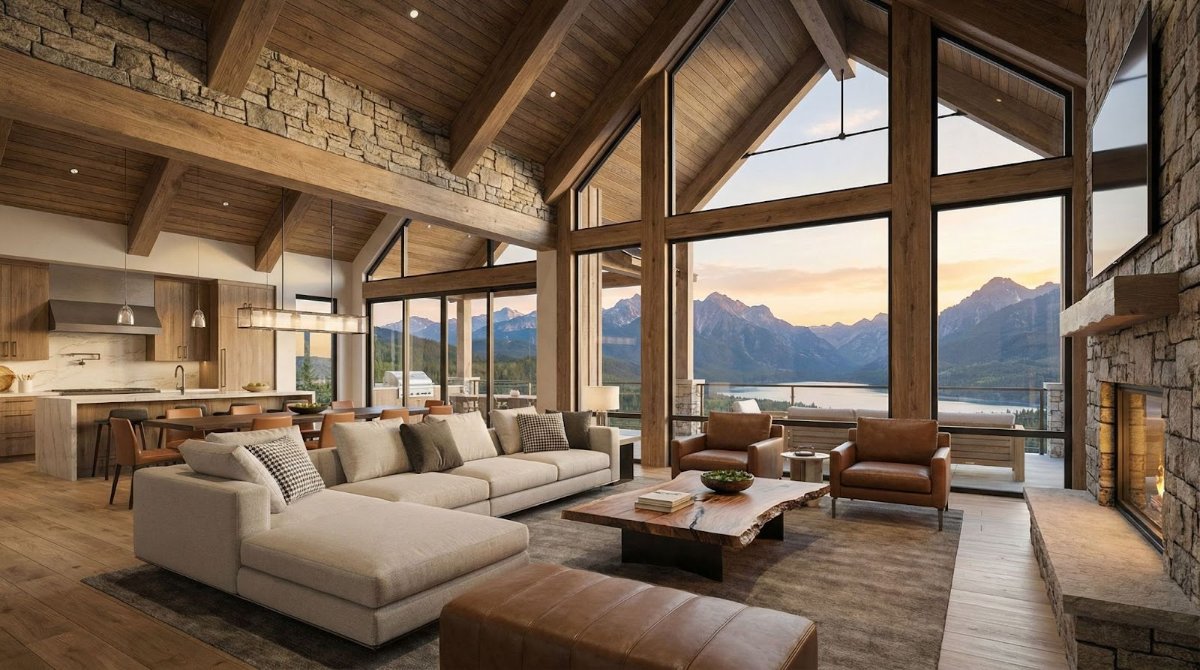
The platform handles the unique aspects of mountain homes particularly well. Those dramatic ceiling heights that make Park City properties special? Arcadium accurately renders vertical space so you understand how furniture scale relates to room volume. The massive windows that define slope-side living? The software shows how natural light patterns change throughout the day, helping you position furniture to maximize views while avoiding glare issues.
Creating Realistic Mountain Home Interiors
Arcadium's furniture library includes the oversized pieces mountain homes demand. Standard suburban furniture looks lost in rooms with 18-foot vaulted ceilings and walls of windows. The platform lets you place appropriately scaled sectionals, substantial dining tables, and statement lighting fixtures that complement rather than disappear into these dramatic spaces.
You can also upload photos of your existing furniture or pieces you're considering purchasing. This feature proves invaluable when you own items with sentimental value or significant investment. That family heirloom hutch or the custom sofa from your previous home can be digitally placed to verify they work in the new space before you commit to moving them up the mountain.
Testing Color Schemes in Mountain Light
Park City's elevation and mountain setting create unique lighting conditions. The intense UV at 7,000 feet affects how paint colors appear. Morning light hitting east-facing rooms differs dramatically from the golden afternoon glow on west-facing spaces. Snow reflection in winter changes everything, bouncing light into spaces in ways that don't occur during summer months.
Arcadium's lighting simulation helps you test paint colors under various conditions. You can see how that warm gray looks with morning sun versus afternoon shade, or how a rich accent wall appears when snow blankets the landscape outside. This testing prevents the common mistake of choosing colors that look perfect in the paint store but wrong in your specific mountain home environment.
Balancing Mountain Views with Functional Living
The primary appeal of Park City homes is the mountain setting. Every design decision should enhance rather than obstruct those views. But you also need functional spaces. The television needs positioning for comfortable viewing. The dining table requires proper relationship to the kitchen. The home office needs task lighting and privacy.
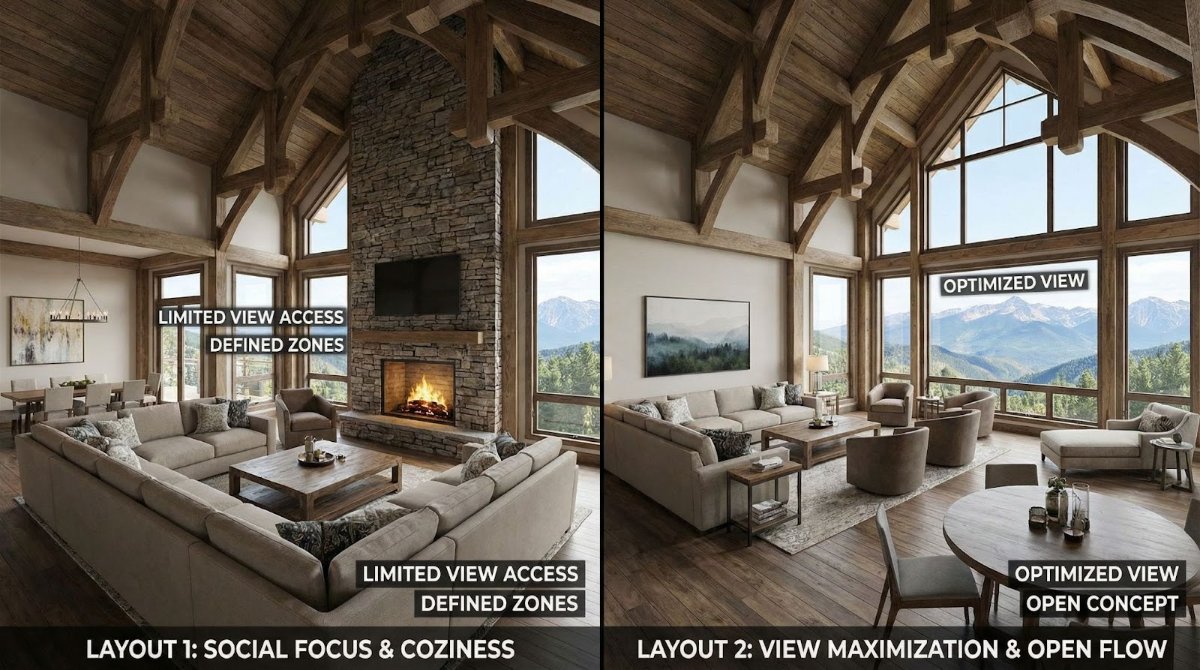
3D design lets you test these competing priorities. Place the sectional facing the fireplace and you might block views. Angle it toward the windows and conversation becomes awkward. Arcadium lets you try multiple arrangements, viewing each from different angles to find the optimal balance between mountain vistas and practical living.
This capability extends to space planning for mountain lifestyle activities. Where does ski gear dry without creating puddles in high-traffic areas? How do you configure mudroom storage for four seasons of outdoor equipment? Can the great room accommodate both intimate family dinners and large après-ski gatherings? Testing these scenarios virtually prevents the frustration of discovering functional problems after you've already moved in.
Planning for Year-Round Mountain Living
Park City homes need to function across dramatic seasonal changes. The property that feels perfect during a winter showing might have issues you haven't considered. Those south-facing windows that flood the space with warmth in January? They'll overheat the room during July afternoons unless properly shaded. The cozy fireplace that defines winter evenings becomes visual clutter in summer unless the furniture layout provides alternative focal points.
Using Arcadium to plan seasonal furniture arrangements helps you understand how spaces adapt throughout the year. You might configure the great room one way for winter, emphasizing the fireplace and creating cozy conversation areas. Summer might call for opening up sight lines to patios and emphasizing outdoor connections. Testing these variations digitally ensures your home works beautifully across all four seasons.
Making Confident Offers in a Competitive Market
Park City's limited inventory and strong demand create competitive buying situations. Properties receive multiple offers, often above asking price. In this environment, hesitation costs opportunities. But rushing into offers without fully understanding how a property works for your needs leads to buyer's remorse.
3D design bridges this gap. After touring a property, you can quickly create a digital version and test your furniture, your color preferences, and your lifestyle needs. Within hours rather than days, you gain clarity about whether this property truly fits. That confidence lets you make strong offers quickly when you find the right home, while avoiding expensive mistakes on properties that seemed perfect but won't actually work.
For properties requiring renovation, having detailed 3D visualizations also helps when negotiating. You can demonstrate specific renovation costs and show sellers exactly what updates you're planning. This transparency often leads to better negotiated prices when sellers understand the work involved in bringing their dated property up to current mountain luxury standards.
Working with Contractors and Designers
Once you've purchased your Park City home, 3D designs created during the shopping process become invaluable communication tools with contractors and interior designers. Rather than describing your vision with words and hoping they understand, you show them exact renderings of what you want.
This clarity prevents costly miscommunication. Your contractor sees precisely where you want that new wall opening. Your designer understands the exact furniture layout you envision. Your window treatment specialist knows which views to emphasize and which to soften. Everyone works from the same visual reference, dramatically reducing the chances of expensive do-overs.
The detailed 3D plans also help contractors provide accurate bids. They can measure materials precisely, understand the scope clearly, and account for the unique challenges of mountain construction. This leads to more competitive pricing and fewer surprise change orders mid-project.
Park City real estate represents a significant investment in both financial terms and lifestyle aspirations. Whether you're buying a ski-in retreat, a year-round mountain residence, or an investment property, the decision deserves thorough consideration. 3D design technology transforms that consideration from imagination-based hoping into data-supported planning.
Before you make your next offer, take the time to digitally recreate the property. Test your furniture arrangements. Experiment with renovation possibilities. Verify that those mountain views work from every important angle. The hours invested in virtual planning prevent years of living with expensive mistakes.
The mountains will still be there tomorrow, but that perfect property might not. With 3D design tools like Arcadium helping you make confident decisions quickly, you can compete effectively in Park City's market while ensuring the home you buy truly becomes the mountain retreat you've envisioned.
Park City, Utah housing market
A quick read on what homes are doing in Park City right now — pulled live from the MLS.
Keep reading
More from the blog

Utah Property Taxes: How Your Assessed Value Really Gets Set

Why Identical Houses Get Different Property Tax Bills

Your First Month in a New Utah Home: A Fall Settling-In Guide