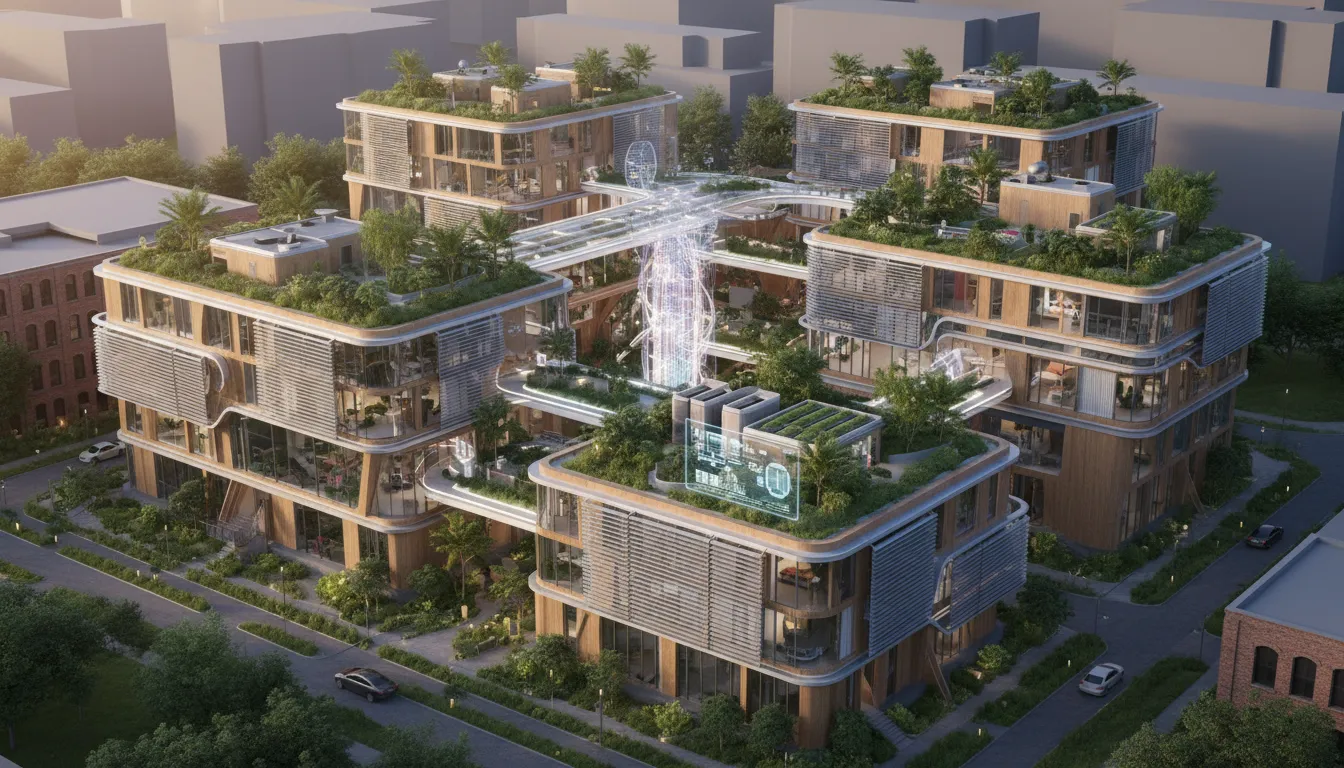
Flexible Home Design for 2026 Without Compromising Architecture
Learn how flexible home design in 2026 balances adaptability, performance, and architectural discipline in modern residential projects.
By 2026, residential architecture is no longer evaluated solely by aesthetics or square footage. Homes are expected to absorb change — in household structure, work patterns, regulations, and technology — while preserving architectural clarity and long-term value. The central challenge facing designers today is not whether flexibility is necessary, but how to embed adaptability into residential architecture without eroding spatial discipline, proportion, or design intent.
The most advanced residential projects treat flexibility as an architectural system, not a collection of ad hoc solutions.
Flexibility Is a Spatial Strategy, Not a Furniture Solution
True architectural flexibility originates at the planning and massing stage. In contemporary residential design, adaptability is no longer achieved through movable partitions or multi-use furniture alone, but through clear structural and spatial hierarchies.
In 2026, flexible homes are typically organized around:
-
Predictable structural grids that allow partitions to shift independently of load-bearing elements.
-
Rational alignment of spans, openings, and vertical circulation.
-
Service cores designed to support multiple future layouts.
This approach allows spaces to evolve without requiring structural intervention, preserving architectural coherence over time.
Designing Rooms for Change, Not Fixed Programs
Modern residential architecture increasingly avoids over-programming. Instead of labeling rooms by single functions, architects design use-neutral volumes capable of transitioning across different life cycles.
This approach supports:
-
Home offices that later function as bedrooms or guest rooms.
-
Secondary living areas adaptable for multigenerational use or rental scenarios.
-
Ground-floor rooms planned for future accessibility without aesthetic compromise.
This shift is clearly reflected in contemporary residential layouts that emphasize efficient circulation, adaptable room proportions, and clear zoning between public and private spaces. Well-developed collections of modern home floor plans demonstrate how flexibility can be achieved without sacrificing architectural order or spatial clarity.
Structural Discipline as the Foundation of Adaptability
One of the most common failures in so-called "flexible" homes is structural inconsistency. Irregular framing, misaligned openings, and overly complex load paths often restrict future adaptability and weaken architectural legibility.
Architecturally rigorous flexibility depends on:
-
Clear separation between primary structure and non-load-bearing partitions.
-
Consistent façade logic that remains intact regardless of interior reconfiguration.
-
Long spans and structural simplicity that support openness without visual noise.
When structure is disciplined, flexibility becomes an asset rather than a constraint.
Infrastructure Planning That Anticipates Future Use
Adaptable homes fail when infrastructure is rigid. In 2026, high-performing residential projects integrate building systems into the architectural framework rather than treating them as fixed technical layers.
Best practices include:
-
Consolidated mechanical and plumbing zones designed for future expansion.
-
Electrical and data infrastructure planned for evolving technology demands.
-
Storage integrated architecturally to support changing spatial needs.
This systems-first approach allows interiors to evolve without compromising architectural clarity or requiring invasive retrofits.
Architecture First, Adaptability Second
The most resilient homes of 2026 follow a clear hierarchy:
-
Architectural clarity.
-
Structural logic.
-
Programmatic flexibility.
Flexibility succeeds only when it operates within a strong architectural framework. When architecture is compromised in pursuit of hypothetical adaptability, homes lose coherence, value, and longevity.
Designing for Change Without Diluting Design Intent
Designing flexible homes in 2026 is not about predicting every possible future scenario. It is about creating architecturally disciplined systems that allow change without disruption.
When flexibility is embedded as a core architectural principle — rather than a reactive feature — residential design becomes more resilient, more livable, and more timeless. In an era defined by evolving lifestyles and regulatory complexity, architecture that anticipates change while maintaining clarity defines the next standard in residential design.
Keep reading
More from the blog
Gas Line Installation: What Homeowners Need to Know First

Roof Timeline Guide for Buying an Older Utah Home
How to Choose Windows for a Utah Home With a Mountain View