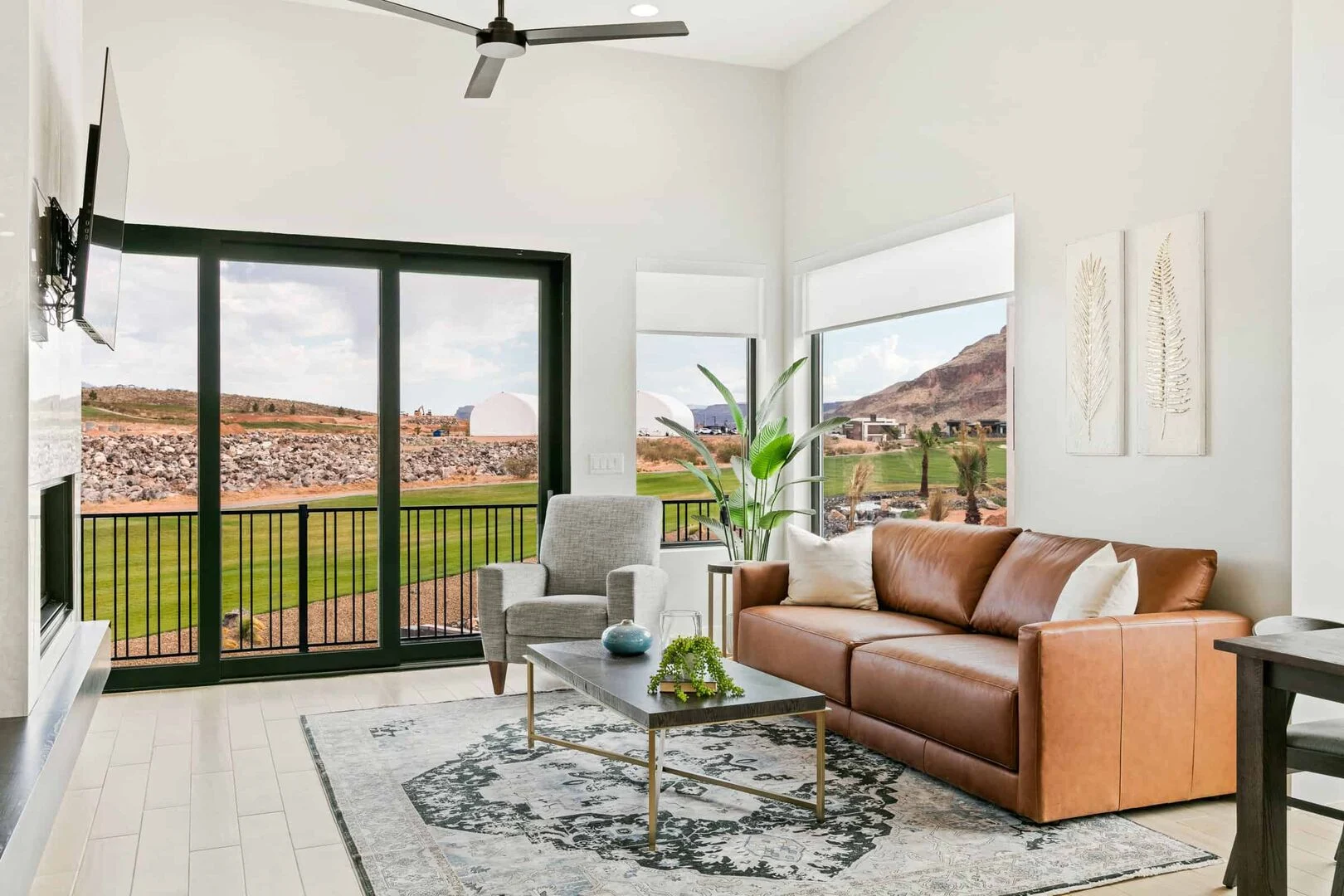
Are Vacation Rentals Allowed in St. George Utah
Many people ask us about the legality of Airbnb in St. George, Utah, and the answer is often disappointing. St. George Utah enforces strict vacation rental laws that can result in substantial fines and legal trouble for homeowners who attempt to list their properties on platforms like Airbnb or VRBO without proper adherence to regulations.
Many people ask us about the legality of Airbnb in St. George, Utah, and the answer is often disappointing. St. George Utah enforces strict vacation rental laws that can result in substantial fines and legal trouble for homeowners who attempt to list their properties on platforms like Airbnb or VRBO without proper adherence to regulations. If a move is on the table, take a look at current St. George homes for sale.
Vacation Rentals and Zoning in St. George, Utah
In St. George, short-term residential rentals are generally prohibited in residential zones, mobile home zones, agricultural zones, and residential plan development zones. According to the St. George City Business Licensing Department, there are exceptions, primarily related to planned development zones, which include communities with over a hundred units, offering amenities like golf courses, tennis or pickleball courts, and pools with clubhouses. Examples of such exceptions include popular areas like Sports Village and Las Palmas in the Green Valley region.
Another limited exception allows short-term rentals in residential areas, but the criteria are stringent. Homeowners can host Airbnb guests if their lot size exceeds two acres, they secure written consent from all neighbors within 300 feet, obtain a business license, and meet strict parking requirements. However, it's doubtful that every Airbnb host in the area complies with these rules.
Neighboring Areas with More Lenient Rules
For those interested in vacation rentals, it's worth exploring neighboring areas like Hurricane, Washington, Santa Clara, and Ivins. These cities have more relaxed short-term rental laws and even communities designed specifically for vacation rentals. The Utah State Legislature regularly reviews legislation that may change the landscape of short-term rentals in Utah.
Hurricane City, Utah: Hurricane City allows short-term rentals in residential zones but with a cap of 48 rentals for the entire city and a waiting list for permits. This waiting list is very long. Several communities, such as Elim Valley, Dunes at Sand Hollow, and Copper Rock, are zoned for vacation rentals.
State-level context: Utah's 2017 short-term rental legislation (the "Internet Listing" amendments to state code) prohibits municipalities from using only the existence of an online listing (Airbnb, VRBO) to prove a violation — they must demonstrate the rental actually occurred. This protects some owner-occupied rentals from purely speculative enforcement but does not override local zoning bans on whole-house nightly rentals in residential zones. The Utah legislature revisits STR preemption proposals most sessions, so the regulatory floor may shift further toward permissive over time.
Washington City, Utah: Washington City does not permit short-term rentals in residential zones, and code enforcement monitors Airbnb listings. However, this may change if new legislation passes. Some vacation rental communities, like Freedom Village and those in Coral Canyon, can be found here.
Santa Clara City, Utah: Santa Clara also restricts short-term rentals in residential zones and monitors Airbnb listings to enforce restrictions. Popular vacation rental communities include Paradise Village, Arcadia, and Ocotillo Springs.
Ivins City, Utah: Ivins generally restricts short-term rentals in residential zones similarly to St. George, but high-end resort communities (Black Desert Resort, parts of Kayenta, and select planned developments) operate under their own zoning and HOA rules. Black Desert in particular has both nightly resort rentals and condo/villa owners who can opt into nightly rental pools. Confirm specifics with the city or HOA before assuming an Ivins property can be rented nightly.
Hurricane-area resort communities: The most popular STR-zoned communities in the broader area are at Sand Hollow Resort, Copper Rock, Coral Canyon (specific sections), and Elim Valley. These are explicitly zoned for nightly rental, have established management infrastructure, and are typically priced 20-40% higher than comparable non-STR-zoned homes — that premium reflects both the rental income potential and the scarcity of compliant inventory.
Owning a Vacation Rental in Southern Utah
While local regulations may seem daunting, many cities have been allowing large vacation rental communities to thrive. These communities often offer attractive amenities like water parks, pickleball courts, and playgrounds, giving your vacation rental an edge over traditional homes. Furthermore, homes within these communities are zoned for vacation rentals, providing peace of mind for property owners."
Practical next steps if you're considering a STR investment
- Verify zoning first. Don't rely on Zillow/Airbnb listings as proof a home can be legally rented — call the city's planning department directly with the specific parcel number before writing an offer.
- Read the HOA CC&Rs. Even in STR-zoned communities, the HOA can impose additional restrictions (minimum-stay requirements, guest limits, blackout dates).
- Budget for compliance. Business license, transient room tax (Utah collects on rentals under 30 nights), state sales tax, and county lodging tax all apply. Property management runs 20-30% of gross.
- Talk to existing STR owners in the community about occupancy rates and net income before committing — actual numbers are often 15-30% lower than the AirDNA projections.
Related Articles:
- Buying Vacation Rentals in St. George
- Vacation Rentals St. George Utah — investment guide
- Top 5 vacation rental communities in St. George
- Reach out to Best Utah Real Estate — we specialize in STR-zoned inventory across the southern Utah market and can help vet whether a target home is genuinely compliant.
Posted by Kristopher Larson
Frequently asked questions
Are Airbnbs (short-term rentals) legal in St. George, Utah?
Where can I legally run a short-term rental in southern Utah?
What's the difference between Hurricane and St. George STR rules?
Do I need a license to run an Airbnb in St. George?
How much does an STR-zoned home cost vs. a regular home in St. George?
Can I rent my St. George home out for less than 30 days if it's in a residential zone?
St George, Utah housing market
A quick read on what homes are doing in St George right now — pulled live from the MLS.
Keep reading
More from the blog
Gas Line Installation: What Homeowners Need to Know First
Roof Timeline Guide for Buying an Older Utah Home
How to Choose Windows for a Utah Home With a Mountain View