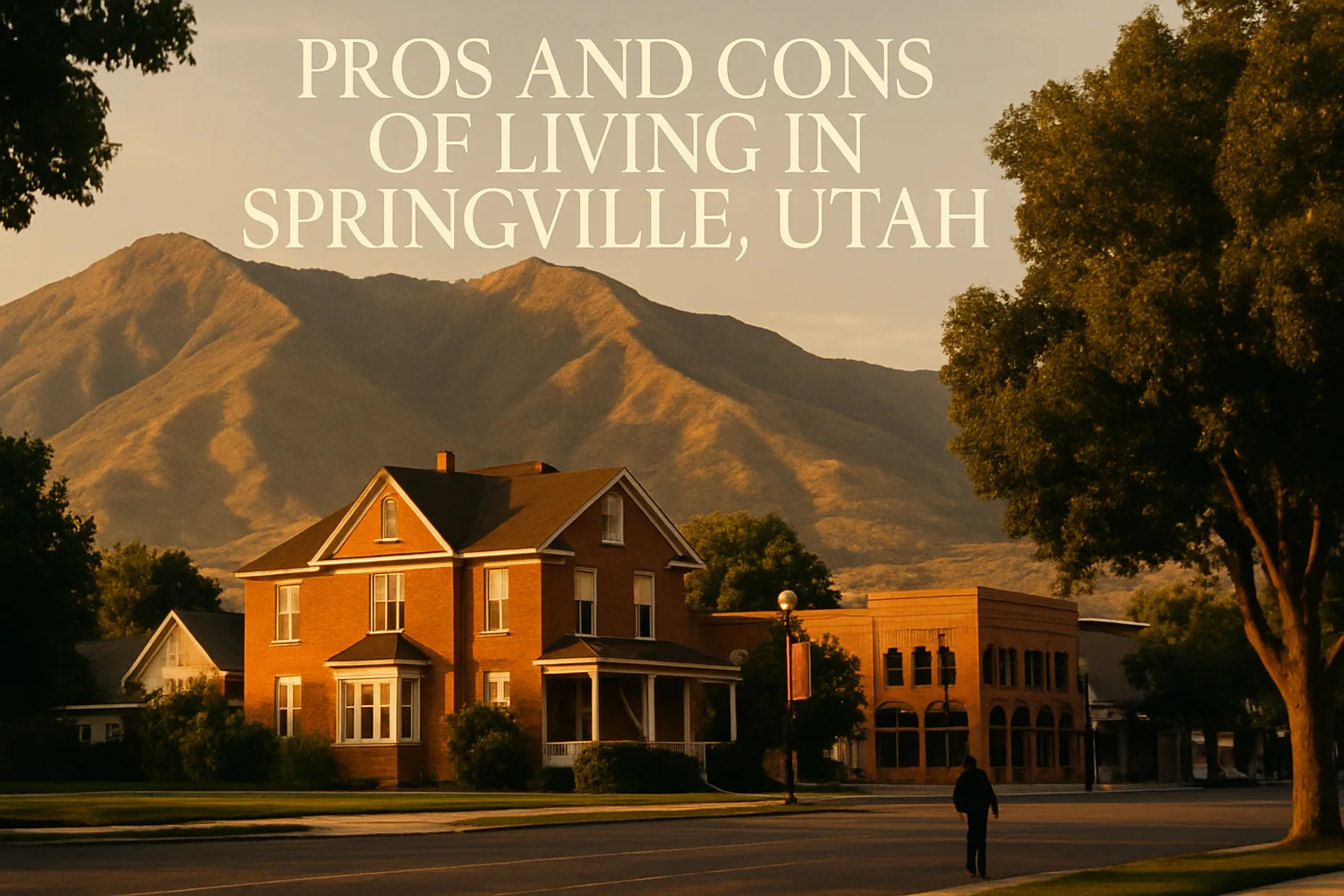
Living in Springville, Utah 2026: Art City Pros & Cons
Springville is Utah County's "Art City" — home to Utah's oldest visual fine arts museum (1903), the 40-year-old World Folkfest, Hobble Creek Canyon access, and one of the fastest residential markets in the cluster. Here's the honest 2026 read on the commute, schools, market speed, and the trade-offs.
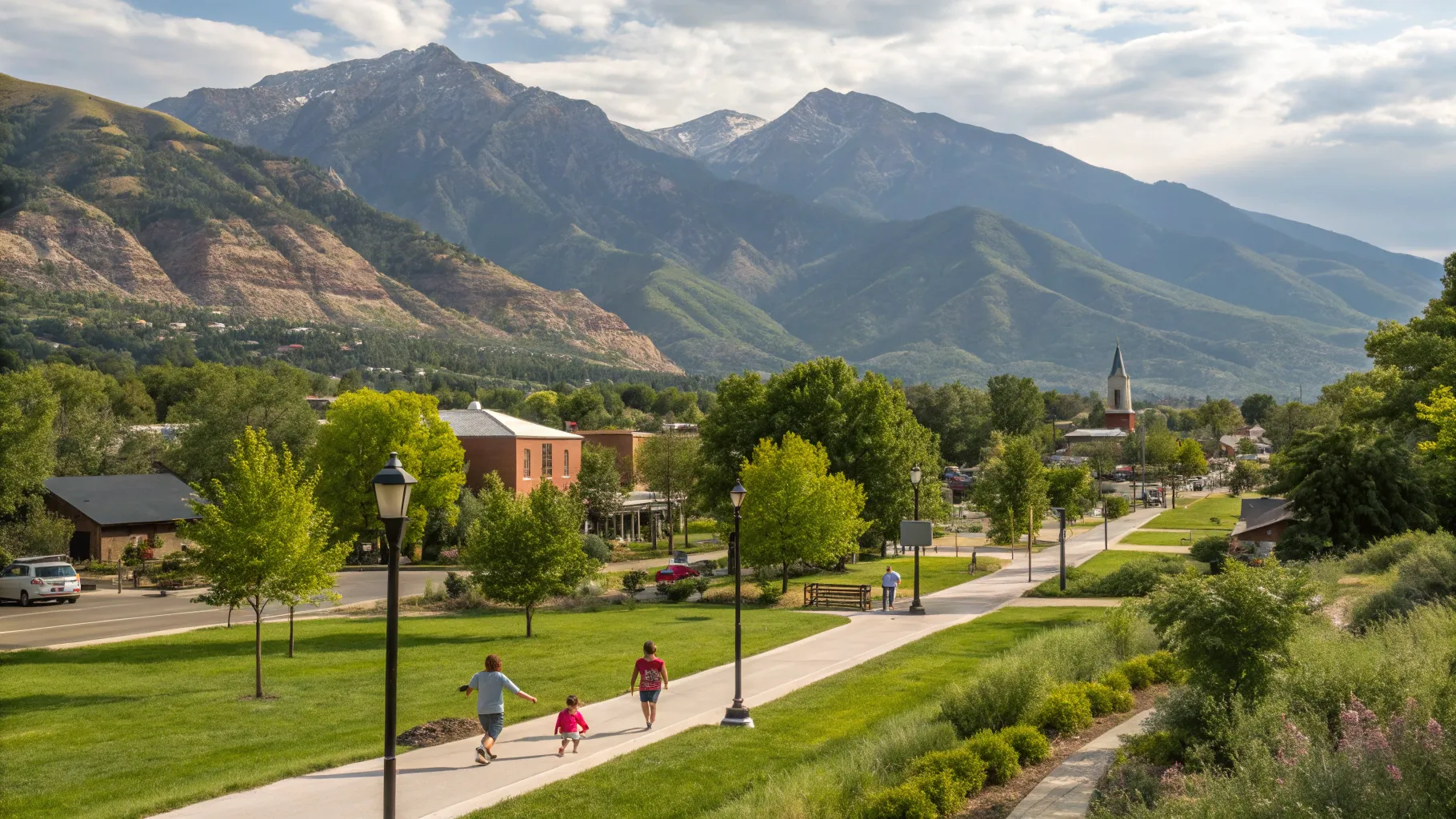
Springville sits between Provo and Spanish Fork at the mouth of Hobble Creek Canyon — close enough to the Utah County job centers to commute, far enough to feel like its own town. Locally it's known as "Art City," a nickname earned in 1903 when Springville High School began collecting donations from Utah artists Cyrus E. Dallin and John Hafen. That collection became the Springville Museum of Art — Utah's oldest visual fine arts museum — and the city's identity has carried that thread for more than 120 years.
The honest question for buyers is not whether Springville is a good place to live. The school district, the museum, the canyon, and the price point all line up. The better question is whether the trade-offs match a specific commute, school stage, budget, and lifestyle. This guide covers what to expect in 2026, where Springville earns its appeal, and where it asks for compromises.
Buyers can also browse current Springville homes for sale alongside this guide, or compare against the broader Utah real estate market.
Who Springville Is Best For
Springville is one of the fastest-moving markets in southern Utah County. The current median sale price is $498,000, with 117 active listings and a median 45 days on market — homes here clear in roughly a third of the time they take in Spanish Fork or Mapleton. That's a buyer urgency signal worth taking seriously.
The strongest fits:
- Families wanting an established, mature small-town feel — Springville has been a real city for over a century, with the trees, sidewalks, and neighborhoods to show for it
- Provo and BYU-area workers who want a quieter alternative just south of the freeway interchange
- Buyers who actually use the outdoors — Hobble Creek Canyon, Hobble Creek Golf Course, and the canyon trail system are directly accessible
- Households drawn to arts and community events — the museum, Art City Days, and the annual World Folkfest are real cultural anchors
- Buyers comfortable with a fast market — Springville's pace means strong properties get multiple offers quickly
It's a weaker fit for buyers waiting for a "deal" in a slow market, anyone needing significant walkability beyond downtown, or households expecting the dense retail of Spanish Fork's Canyon Creek without driving 10 minutes south.
Springville Home Prices in 2026: What Buyers Should Know
Springville pricing reflects its location: meaningfully below Mapleton or Provo, comparable to Spanish Fork, and notably faster-moving than either.
As of the most recent reporting month, Springville's market stats are:
- Median sale price: $498,000
- Active listings: 117
- Median days on market: 45 days
- Sale-to-list ratio: 98.4%
The days-on-market number is the headline. Springville clears homes faster than Spanish Fork (14 days) and dramatically faster than Nephi (data unavailable). That speed matters in two directions: buyers should expect competition on well-priced listings, and sellers can plan shorter marketing windows than they would in slower nearby markets.
Inventory ranges from homes under $500K on the west and central sides of town through new-construction on the east-side benches, plus a real luxury segment on view lots up against the foothills. The most consistently active communities by recent sales are Westfield, Springbrook, Foxridge, and Brookline.
Why Zillow estimates miss the mark here
Utah is a non-disclosure state — sale prices are not publicly reported to third-party valuation sites the way they are in many other states. That hurts Springville pricing accuracy specifically because the market moves fast: a comp from six months ago is genuinely stale. Buyers shopping by Zillow estimate alone will miss most of the actual range, and sellers using it as a pricing anchor will frequently underprice their listing.
The Commute Reality
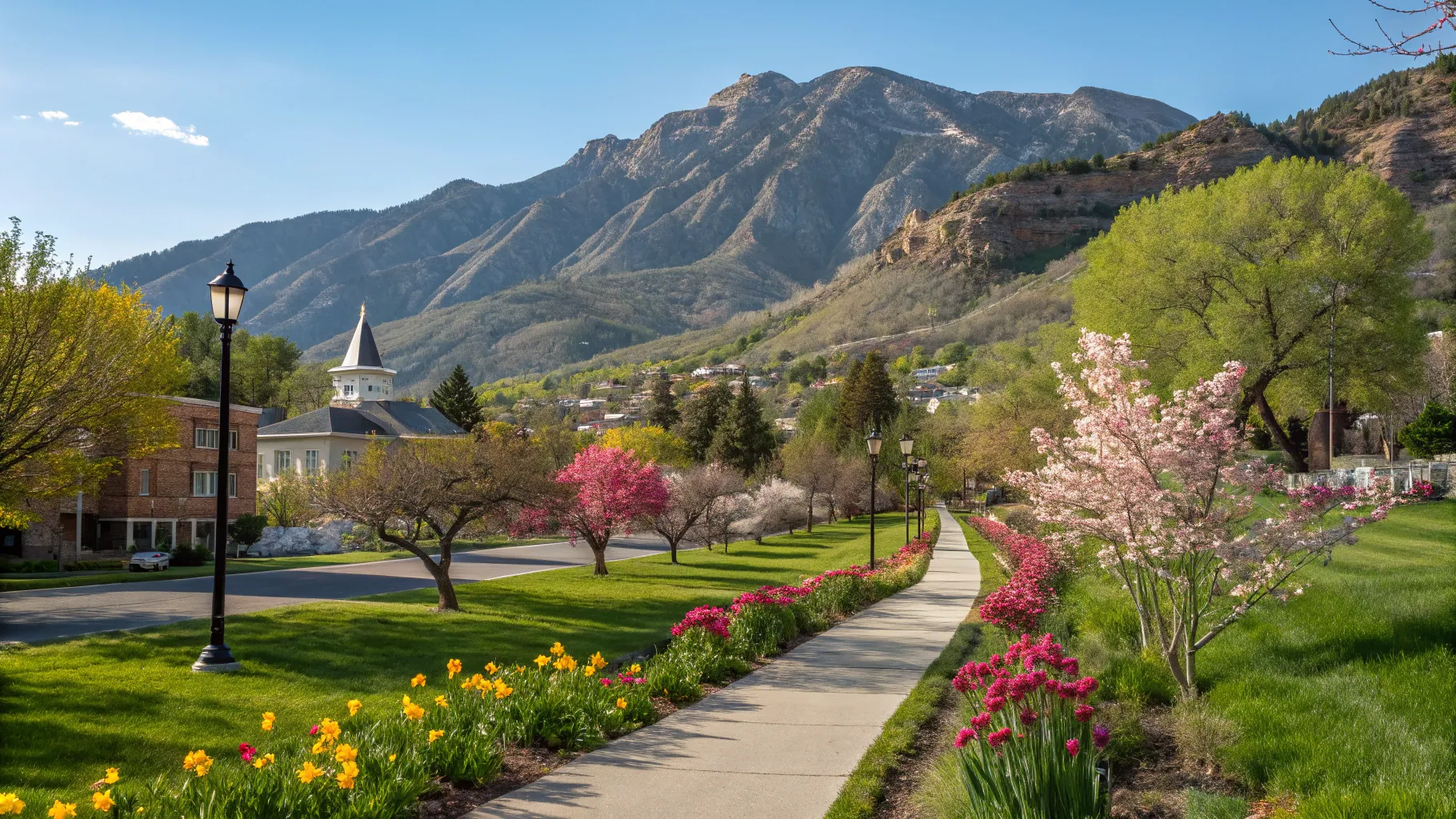
Springville's location is one of the better-balanced commutes in Utah County.
When the commute works
- Provo: about 10 to 15 minutes north on I-15 in normal traffic
- Orem and UVU: 15 to 20 minutes
- Spanish Fork: about 8 minutes south for Canyon Creek shopping
- Lehi / Silicon Slopes: 30 to 35 minutes off-peak
For Provo-area workers, Springville is genuinely close. BYU faculty and staff, hospital workers, and Utah Valley employees can have a 15-minute door-to-door commute in good traffic.
When it doesn't
Daily peak-hour commutes to downtown Salt Lake City run 45 to 60 minutes one way before snow or accidents. The bigger daily issue is local: the I-15 northbound merge during morning rush hour can add 10–15 minutes, and the Main Street interchange backs up during peak times and events.
Schools in Springville
Springville is part of Nebo School District. The city's schools include:
- Springville High School — the original on the west side
- Maple Mountain High School — opened 2009, draws from Springville's east side and parts of Mapleton
- Springville Junior High
- Multiple elementary schools inside city limits
The two-high-school option matters more than it sounds. Boundary lines between Springville High and Maple Mountain have shifted as both Springville and Mapleton have grown — buyers should verify school assignment for the exact address before making an offer, especially on east-side properties where the boundary has moved most.
Safety and Everyday Feel
Springville consistently ranks among the safer Utah County cities. Crime trends with population growth but is concentrated in property crime; violent incidents are rare. The everyday feel splits across two halves: the historic west side has mature trees, brick storefronts, and an established downtown along Main Street and 400 South; the eastern benches feel newer with larger lots and view-oriented architecture.
This is a city that hasn't lost its small-town character even as it's grown past 36,000 people. That matters for buyers comparing it to the more suburban-feeling cities to the north.
The Springville Museum of Art and World Folkfest: The Cultural Anchors
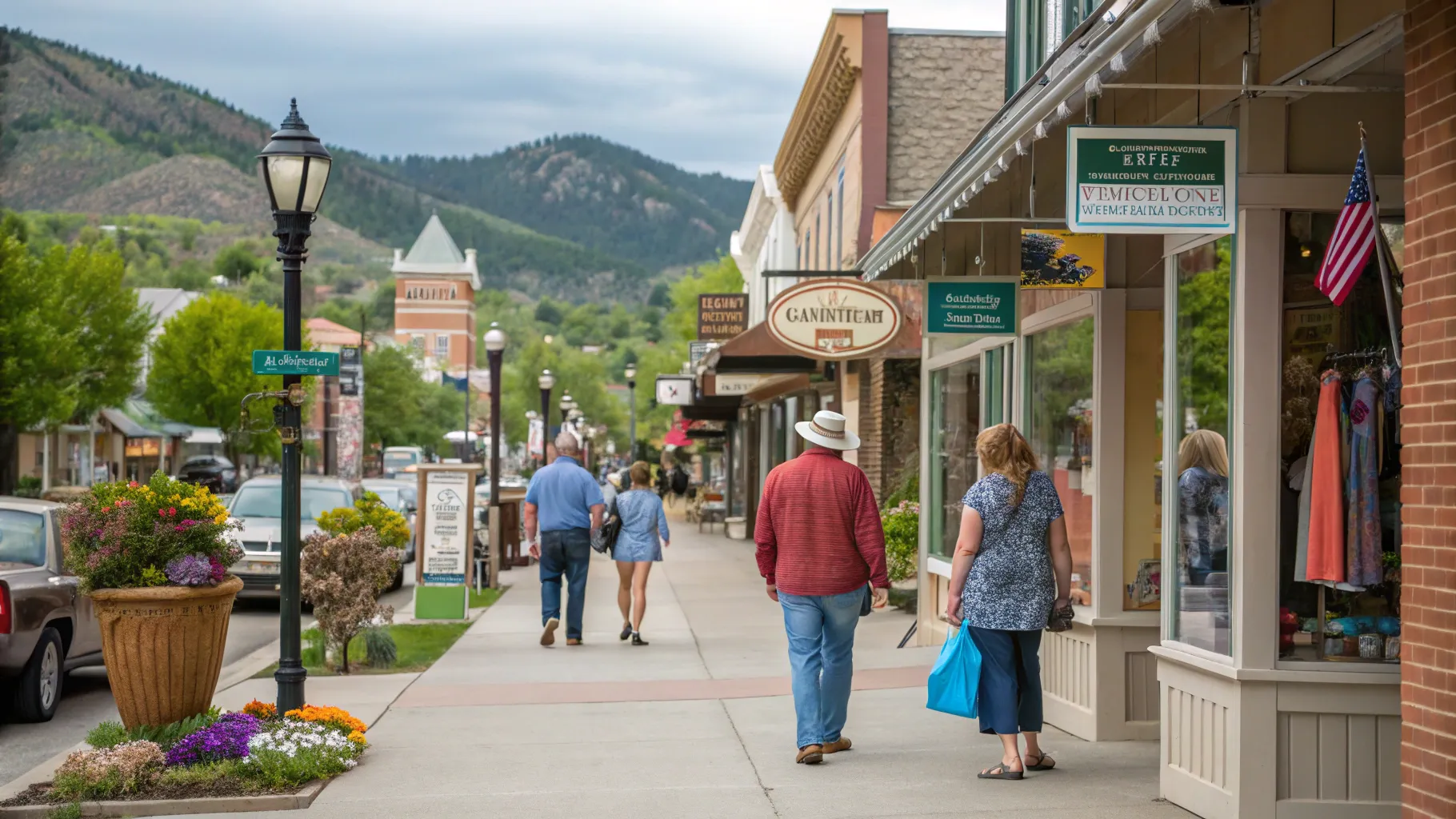
Two institutions define Springville's identity beyond what its population would predict.
The Springville Museum of Art — Utah's oldest visual fine arts museum — traces its founding to 1903, when Utah artists Cyrus E. Dallin and John Hafen began donating work to Springville High School. The current Spanish Colonial Revival building opened in 1937, dedicated as "a sanctuary of beauty and a temple of meditation." The museum is free, hosts rotating national exhibitions, runs the annual Spring Salon, and offers educational programs that draw schoolchildren from across Utah Valley.
The Springville World Folkfest, founded in 1986, is Utah's only international folk dance festival and one of the largest of its kind in the Western United States. Held the last week of July through early August, the festival brings touring folk-dance ensembles from around the world to perform nightly at Spring Acres Park. Gates open at 5:30 PM with global food trucks and meet-and-greets; performances start at 7:30 PM.
Plus the annual events:
- Art City Days — Springville's signature June festival, with a parade, carnival, hot air balloon launch, fireworks, and museum events
- Festival of Lights at Canyon View Park — drive-through holiday light display from Thanksgiving through New Year's
- Spring Salon — the annual juried exhibition of Utah artists at the museum, running since the museum's founding
For families with kids in the arts or households drawn to community culture, these anchors carry real weight. Few Utah County cities of Springville's size offer this depth of programming.
Family Life and Outdoor Access
Springville's recreation hook is Hobble Creek Canyon, which opens directly east of town and provides access to:
- Hobble Creek Golf Course — a public 18-hole course tucked into the canyon, consistently rated among Utah's most scenic
- Kelly's Grove and Jolly's Ranch — group-use picnic and event sites with creekside access
- Forest Service trails for hiking, mountain biking, and access to deeper backcountry
- Wayne Bartholomew Park at the canyon mouth — a small reservoir for paddleboarding and kayaking, plus playgrounds
The city's parks system is unusually strong for a city this size. Spring Acres Park is the largest, hosting summer movie nights and the World Folkfest grounds. Smaller neighborhood parks (Big Hollow, Bird Park, Memorial Park) anchor most of the older subdivisions. The Clyde Recreation Center opened in the last decade with a two-story layout featuring indoor pools with slides, basketball courts, weight rooms, and group fitness classes — Springville residents get reduced rates.
Retail and Dining: Honest Expectations
The 400 South corridor has become Springville's commercial spine, with a Walmart, several strip-mall anchors, and a mix of fast-casual restaurants. Walking-friendly Main Street downtown has a handful of local restaurants, a few specialty shops, and the kind of small-town storefronts that newer suburbs no longer build.
For larger shopping and dining variety, most residents drive 8 minutes south to Spanish Fork's Canyon Creek (Costco, Lowe's, Olive Garden, Texas Roadhouse) or 15 minutes north to Provo and Orem. Springville's own dining mix is improving each year but still skews casual rather than upscale.
The Real Trade-Off
Springville's trade-off is the trade-off of a mature, mid-sized city with real culture but limited urban retail:
- What buyers get: Utah's oldest art museum, two high schools, direct Hobble Creek Canyon access, a fast market, an established downtown, the World Folkfest, and a real 120-year-old "Art City" identity
- What buyers give up: the dense retail of Spanish Fork's Canyon Creek, the upscale dining of Provo, and the ability to wait out a slow market — Springville sellers have leverage
For most Utah County families, the math works clearly. For buyers prioritizing shopping convenience over culture and outdoor access, the case is less strong.
A Simple Scorecard for Deciding if Springville Fits
Before choosing Springville, buyers can run a five-part check:
1. Commute reality
Test the actual northbound I-15 drive at 7:30 AM on a weekday. The 10–15-minute Provo number is real for off-peak, but rush hour adds 10–15 minutes through the merge.
2. Side of town
The historic west-side grid, the eastern foothill subdivisions, and the south-side newer developments all live and price differently. Drive each before committing.
3. School boundary
Confirm Springville High vs. Maple Mountain assignment for the exact address. Boundaries have shifted multiple times as both Springville and Mapleton have grown.
4. Market urgency
Springville's 45 days-day market doesn't reward patience. Buyers should be pre-approved and ready to act on a well-priced listing within days, not weeks.
5. Culture vs. convenience
Is the museum, the canyon, the Folkfest, and Art City Days something the household will actually use? If yes, Springville's value compounds. If not, the case rests mostly on price and schools.
Common Mistakes Buyers Make Before Moving to Springville
- Treating it like Spanish Fork — Springville is meaningfully smaller and more arts-oriented, with less retail inside city limits
- Trusting Zillow estimates in a fast-moving non-disclosure market — automated valuations lag here more than in slower cities
- Assuming the school boundary will hold — verify the address before buying, especially east-side
- Underestimating market speed — well-priced listings often go in 7–14 days; pre-approval matters
- Missing the canyon-mouth wind — Hobble Creek Canyon produces evening winds that some east-side homes catch harder than others
- Skipping the museum on a buyer tour — it's a defining piece of the city's character, not optional context
Is Springville a Good Place to Live in 2026?
Yes — for the right buyer, Springville is one of the strongest options in southern Utah County. It works well for:
- Families wanting an established small-town feel with strong schools
- Provo-area workers needing a short commute
- Households drawn to arts, culture, and community events
- Outdoor-focused buyers who'll actually use Hobble Creek Canyon and the river trail system
- Buyers ready to move quickly in a fast market
It's less ideal for:
- Households expecting in-city big-box retail like Spanish Fork's Canyon Creek
- Buyers waiting for the market to slow down — Springville rarely does
- Anyone deeply sensitive to canyon-mouth wind on east-side properties
- Buyers prioritizing upscale dining within city limits
Bottom Line
Springville is Utah County's "Art City" — a mature small city with the state's oldest art museum, a 40-year-old international folk festival, two high schools, direct canyon access, and one of the fastest residential markets in the cluster. The trade-offs are limited in-city retail and a market that doesn't reward hesitation. The three things easiest to test before buying are the actual rush-hour commute, the school boundary for a specific address, and whether the culture and canyon access fit how the household actually lives.
For more context on Utah relocations, the broader moving to Utah guide covers statewide considerations. Anyone serious about Springville should walk through current Springville homes for sale and reach out for a tour.
Posted by Kristopher Larson
Frequently asked questions
Is Springville, Utah a good place to live?
Yes, particularly for families wanting an established small-town feel with strong schools and arts culture. Springville is part of Nebo School District (with Springville High and Maple Mountain High), home to Utah's oldest visual fine arts museum (founded 1903), the World Folkfest international dance festival, and direct access to Hobble Creek Canyon. The market is one of the fastest in southern Utah County, so buyers should be ready to act on well-priced listings quickly.
How long is the commute from Springville to Provo?
About 10 to 15 minutes north on I-15 in normal traffic. Orem and UVU run 15 to 20 minutes, Spanish Fork is 8 minutes south, Lehi and Silicon Slopes run 30 to 35 minutes off-peak, and downtown Salt Lake City runs 45 to 60 minutes during weekday rush hour. The I-15 northbound merge during morning rush adds 10 to 15 minutes.
What schools serve Springville, Utah?
Springville is part of Nebo School District. The city has Springville High School on the west side and Maple Mountain High School (opened 2009) on the east side, plus Springville Junior High and multiple elementary schools inside city limits. Boundary lines between Springville High and Maple Mountain have shifted as both Springville and Mapleton have grown, so families should verify school assignments for an exact address before buying.
What is Springville, Utah known for?
Springville is nicknamed "Art City" for its 120-year arts identity. The Springville Museum of Art, founded in 1903, is the oldest visual fine arts museum in Utah and is free to visit. The annual World Folkfest, an international folk dance festival running since 1986, is held in late July and early August at Spring Acres Park. The city also hosts Art City Days in early June and the Festival of Lights drive-through at Canyon View Park each holiday season.
How much do homes in Springville cost in 2026?
Springville's median sale price is around $498,000 as of the most recent reporting month, with 117 active listings on the market and a median 45 days on market. The market moves quickly — homes clear in roughly a third of the time they take in Spanish Fork or Mapleton — so well-priced listings often see multiple offers within days.
What outdoor recreation is near Springville?
Hobble Creek Canyon opens directly east of town and provides access to Hobble Creek Golf Course, the Kelly's Grove and Jolly's Ranch picnic areas, Forest Service hiking and mountain biking trails, and Wayne Bartholomew Park's small reservoir for paddleboarding. Spring Acres Park is the city's largest park and hosts the World Folkfest. The Clyde Recreation Center adds indoor pools, fitness facilities, and basketball courts inside city limits.
Springville, Utah housing market
A quick read on what homes are doing in Springville right now — pulled live from the MLS.
Keep reading
More from the blog
Gas Line Installation: What Homeowners Need to Know First
Roof Timeline Guide for Buying an Older Utah Home
How to Choose Windows for a Utah Home With a Mountain View